
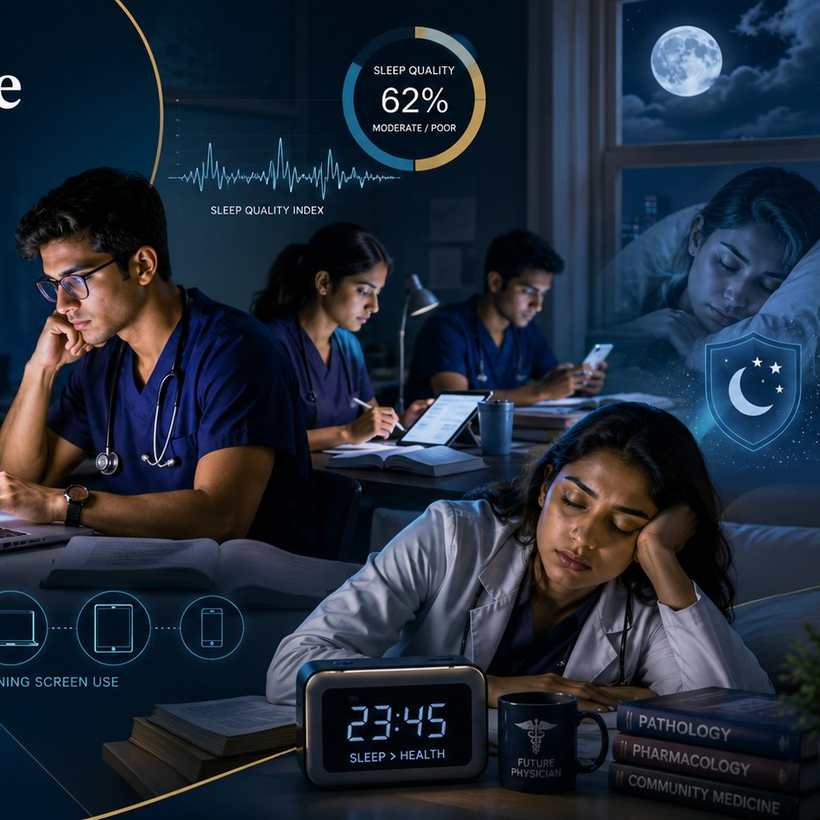
Digital Screen Time and Self-Reported Sleep Quality Among Medical Students: A Cross-Sectional Study
Background: Excessive screen time is increasingly recognised as a determinant of sleep quality among young adults. Medical students represent a high-risk group given academic and device-related exposures.
Methods: A cross-sectional study was conducted among 200 MBBS students at a government medical college in Telangana. Screen time was self-reported and sleep quality was assessed using the Pittsburgh Sleep Quality Index (PSQI). Spearman correlation and multivariate logistic regression were performed.
Results: Mean daily screen time was 6.4 hours (SD 2.1). Poor sleep quality (PSQI > 5) was reported by 58% of participants. Screen time showed a significant positive correlation with PSQI score (ρ = 0.42, p < 0.001). Odds of poor sleep were 2.3 times higher (95% CI: 1.4–3.8) among students with screen time ≥ 6 hours/day.
Conclusion: High screen time is significantly associated with poor sleep quality in medical students. Digital wellness interventions targeting screen habits may improve sleep outcomes in this population.